StarCraft for people who have never played an RTS
Terran, Zerg and Protoss explained without the jargon.
StarCraft has a reputation for being hard, the kind of game played at hundreds of actions per minute by professionals with lightning reflexes. That’s true at the top of competitive play, but it doesn’t have to be your experience. Millions of people have enjoyed StarCraft at their own pace, through its campaigns, against the computer or in casual games with friends.
This guide explains the basics in plain language. No jargon, no build orders, no pressure. Just what you need to understand the game and start having fun.
What is an RTS?
A real-time strategy game is about three things at once:
- Economy: your workers gather resources — in StarCraft, minerals and vespene gas.
- Production: with those resources you construct buildings and train units.
- Combat: you move your army to defend yourself and destroy the enemy.
It all happens simultaneously, with no turns. While your army fights, your workers keep mining and your buildings keep producing. The fun — and the challenge — lies in balancing those three tasks.
Think of it like cooking several dishes at once: you can’t focus on one and forget the others.
The basic loop
A typical game follows a pattern:
- Start with a main building and a few workers.
- Build more workers to gather resources faster.
- Construct buildings that unlock new units and technologies.
- Train an army.
- Expand to new resource locations as your base grows.
- Attack your opponent — or defend against their attacks.
The player who manages this loop better usually wins.
Key concepts in plain words
Supply
Every unit takes up supply, a kind of population limit. To build more units, you need to raise your supply cap by building specific structures (supply depots for Terran, overlords for Zerg, pylons for Protoss). If you forget, you’ll suddenly be unable to train anything — a classic beginner mistake.
Tech
Buildings unlock other buildings and units. This is the tech tree. Early units are cheap and simple; advanced ones are expensive and powerful but require several buildings first.
Scouting
You can’t see what your opponent is doing unless you send a unit to look. Scouting means finding out what they’re building so you can prepare.
Counters
Units are strong against some enemies and weak against others. Learning which units counter which is a big part of strategy, and the campaigns teach this gradually.
The three races
The heart of StarCraft is its three races, each completely different but carefully balanced.
Terran
The humans, descendants of exiles from Earth. They are the most versatile race:
- Their buildings can lift off and move, letting them relocate or escape.
- Their vehicles, aircraft and buildings can be repaired by workers.
- They have strong defensive structures, like bunkers.
- Their army mixes infantry, vehicles and aircraft.
They’re the recommended race for learning, since they’re the most intuitive and forgiving.
Zerg
An alien species that works like a swarm, directed by a collective intelligence:
- All their units hatch from larvae at their hatcheries.
- Units are cheap and numerous, overwhelming enemies through sheer numbers.
- They spread over an organic carpet called creep, on which they build.
- Their buildings are living creatures, mutated from workers.
They’re played through pressure, speed and constant production. They can feel chaotic at first, but they’re incredibly satisfying once you get the hang of them.
Protoss
A technologically advanced, psychic alien race:
- Their units are expensive but very powerful, with strong individual abilities.
- They’re protected by regenerating shields, on top of their health.
- Their buildings must be near pylons, power generators that also provide supply.
- Workers summon buildings, which then warp in on their own.
Every unit counts. Losing a few can be a big setback, but a well-managed Protoss army is formidable.
Where to start
The campaign
The campaign is the best tutorial: it introduces units gradually, with a story that gives context to everything. You’ll learn each race in turn and see what makes them unique.
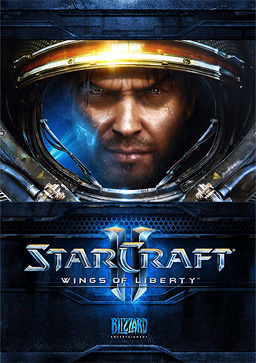
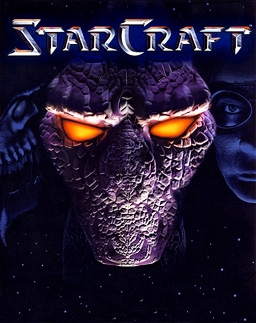
StarCraft with its expansion Brood War has been free since 2017, and so has the first StarCraft II campaign, Wings of Liberty. Both are excellent places to start. If you go with StarCraft II, our campaign guide explains how to approach the trilogy.
Against the computer
Once you’ve learned the basics, play against the AI on easy before moving on to multiplayer. It lets you practise without pressure and try different strategies.
With friends
Playing cooperatively against the computer with a friend is a relaxed way to learn. In StarCraft II, co-op missions let you play together with special commanders.
Beginner tips
- Always be building workers early in the game. A strong economy is the foundation of everything.
- Don’t get supply blocked: keep an eye on your supply and build ahead.
- Spend your resources: if you have a lot of unspent minerals, you’re falling behind.
- Use hotkeys as you get comfortable: they make everything faster.
- Don’t obsess over speed. First learn what to build and when. Speed comes with practice.
- Watch replays of your games: you’ll spot mistakes you didn’t notice while playing.
Is it worth it today?
Yes. StarCraft remains one of the best-designed strategy games ever made: three completely different races that are nevertheless balanced, a story full of memorable characters and a competitive scene that has lasted for decades — including in the north, as we explain in StarCraft in the north.
Even if you never play competitively, its campaigns are among the best science fiction stories in gaming. Start slowly, enjoy the story and let the game teach you. You might be surprised how quickly it clicks.