The campaign that shaped Azeroth
Before World of Warcraft there were four campaigns that turned a generic fantasy world into one of the most recognisable universes in gaming.
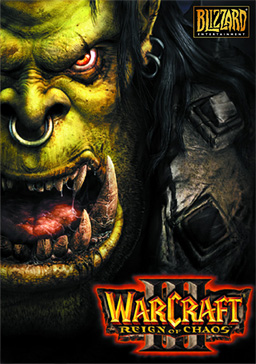
Warcraft III: Reign of Chaos arrived in 2002 with a bet that looked risky for a strategy game: telling a real story. Not a series of missions loosely connected by briefings, but a narrative with named heroes, betrayals, tragedy and a clear arc — told through in-engine scenes, cinematics people still remember and a campaign split into chapters that tell a single story from different sides.
The two earlier Warcraft games had established a world of humans versus orcs. Warcraft III expanded it, deepened it and, above all, gave it characters. Almost everything that millions of players would later explore in World of Warcraft was born here.
A different kind of RTS
Before the story, the design. Warcraft III introduced heroes: powerful units that gain experience, learn abilities and carry items. They were the heart of each army and, crucially, the heart of each story. When you controlled Arthas or Thrall in a mission, you weren’t just moving a unit; you were playing a character.
It also introduced four asymmetric races — Human Alliance, Orcish Horde, Undead Scourge and Night Elves — each with its own economy, buildings and style. And it added neutral creeps on the map, giving players a reason to explore and fight before meeting the enemy.
These ideas made the campaign feel closer to an RPG than to a traditional RTS — a direction Blizzard would push much further a couple of years later.
The prologue: Exodus of the Horde
The game begins with a short orc prologue that doubles as a tutorial. Thrall, the young warchief of the orcs, is warned in a vision that he must lead his people across the sea to Kalimdor. It’s a modest start, but it plants the idea that drives the whole game: something terrible is coming, and old enemies will need each other.
The humans: the fall of Arthas
The human campaign is, above all, the tragedy of Prince Arthas. He starts as a confident, impulsive paladin, beloved by his people and trained by the wise Uther. A mysterious plague is spreading through the northern villages of Lordaeron, turning people into undead, and Arthas sets out to stop it.
What follows is one of the great tragic arcs in gaming. Arthas becomes increasingly obsessed with defeating the plague’s source, and his decisions grow more terrible each time:
- The Culling of Stratholme: faced with a city whose grain has been infected, Arthas orders its population killed before they can turn. Uther and Jaina refuse to take part and leave him.
- The expedition to Northrend: Arthas pursues the demon behind the plague to the frozen north, burning his own ships to stop his men from turning back.
- Frostmourne: to win, he takes up a cursed runeblade, sacrificing his soul for power.
The player doesn’t just watch — they’re the one giving the orders in every mission. That complicity is what makes the campaign so effective.
The undead: the Scourge
With Arthas now a death knight in service of the Lich King, the game flips the perspective. We play as the Scourge, spreading the plague across the lands we were defending an hour earlier.
Arthas returns home and murders his father, King Terenas, in one of the most famous cinematics of the era. He then helps resurrect the necromancer Kel’Thuzad at the Sunwell, the source of the high elves’ power, devastating their kingdom of Quel’Thalas along the way.
It’s one of the first times a mainstream strategy game asked us to play as “the bad guys” without softening it. The campaign also introduces the demons of the Burning Legion, the true power behind the Scourge, setting up the conflict of the second half.
The orcs: the exodus to Kalimdor
Thrall leads the orcs across the sea to Kalimdor. Here we meet Cairne Bloodhoof and the tauren, a noble people threatened by centaurs, and build the alliance that will become the core of the Horde.
The emotional centre of this campaign is Grom Hellscream, a fierce warrior whose people once drank demon blood to gain power, enslaving them to the Legion. When Grom falls prey to the same corruption again, Thrall must save him. Grom’s final battle against the demon Mannoroth is one of the most celebrated moments in the series — a story of redemption that would echo through Warcraft for years.
The night elves: Mount Hyjal
The final chapter introduces the night elves, an ancient people hidden in the forests of Kalimdor. Tyrande Whisperwind, high priestess of the moon goddess, must awaken her beloved Malfurion Stormrage and his druids. Malfurion’s brother, Illidan, imprisoned for millennia for an ancient betrayal, is freed — and quickly proves that he can’t be trusted.
Everything converges on the battle of Mount Hyjal, where the demon lord Archimonde attempts to destroy the World Tree. Humans led by Jaina, orcs led by Thrall and night elves led by Tyrande and Malfurion must fight side by side. The final missions, where you hold the line in waves while each faction’s base falls one after another, are some of the most memorable in RTS history.
It’s the ending that forces enemies to cooperate — an idea that would run through the whole story of World of Warcraft.
The legacy
The expansion The Frozen Throne (2003) closed Arthas’s arc, introduced the blood elves and the Forsaken, and ended at the top of Icecrown. We covered it in our Frozen Throne retrospective.
And World of Warcraft (2004) was built directly on top of that political map:
- Thrall’s Horde settled in Durotar, with the tauren at its side.
- The Alliance survived without Lordaeron, led from Stormwind.
- Sylvanas’s Forsaken took over the ruins of Lordaeron.
- The night elves joined the Alliance after Hyjal.
- The Lich King waited in Northrend, eventually becoming the focus of Wrath of the Lich King.
Almost everything WoW players know was born in these campaigns. If you want to see where the story went next, our overview of twenty years of World of Warcraft expansions picks up the thread.
Why it still matters
Twenty-plus years on, Reign of Chaos still feels remarkably modern. Its storytelling, its heroes and its asymmetric races influenced not only Blizzard’s later games but the entire RTS genre — and, through the World Editor, gave birth to new genres altogether, as we explain in From map editor to the birth of a genre.
If you’ve never played it, the original campaign is still the best way into the Warcraft universe. Our guide on how to play Warcraft III today explains which version to get. And if you already know it, go back: Arthas’s arc reads very differently when you know how it ends.