StarCraft in the north: the Nordic competitive scene
From the LANs of Jönköping to Serral's world title. Why the Nordic countries have always had something to say in StarCraft.
For years, talking about competitive StarCraft meant talking about South Korea. It was there that StarCraft became a televised sport, with professional teams, dedicated channels and players who were household names. For a long time, the question for everyone else wasn’t whether they could beat the Koreans, but how close they could get.
But if there’s one region outside Asia that has consistently stood up to that dominance, it’s northern Europe. Sweden, Finland, Norway and Denmark have produced a disproportionate number of strong StarCraft players for countries of their size. This is a look at why — and at the moment the whole scene changed.
LAN culture
Part of the explanation lies in the big LAN parties. Long before esports had arenas and sponsorships, thousands of players would carry their computers to a hall and spend a weekend playing together.
- DreamHack, born in Sweden and held for years in Jönköping, grew from a small gathering into one of the biggest LAN events in the world, and later into a major tournament organiser.
- Assembly, in Finland, combined gaming with the demoscene and digital art, and became a reference point for generations of Finnish players.
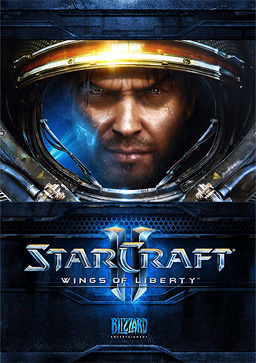
These events were places where local players measured themselves against strong opponents, where friendships and rivalries formed, and where organisers learned how to run competitions. When StarCraft II arrived in 2010, the infrastructure and culture were already in place.
Fast connections and long winters
It’s a cliché, but there’s some truth in it. The Nordic countries were early adopters of high-speed internet, and gaming has long been a mainstream hobby there. Add long, dark winters and you have a population with good connections, good hardware and plenty of reasons to stay indoors.
Combined with strong local communities, that created fertile ground for a demanding, competitive game like StarCraft.
The names
The first generation of StarCraft II produced some very recognisable Nordic players:
- NaNiwa (Sweden), a Protoss player known for his aggressive style and fierce competitiveness, was one of the most prominent non-Korean players of the early years.
- ThorZaIN (Sweden), a Terran player known for his consistency and long career.
- Snute (Norway), a Zerg player who was one of the most respected European players for years.
They competed at the highest level in an era when nearly every major title stayed in Korea, and they inspired a generation of younger players across the region.
Serral: the moment everything changed
The big breakthrough came in 2018. Finland’s Joona “Serral” Sotala, a Zerg player, had a year of extraordinary results, winning tournament after tournament. At the end of it came the WCS Global Finals at BlizzCon, the world championship of StarCraft II.
Serral won. He became the first non-Korean player to win the WCS Global Finals, breaking a dominance that many believed couldn’t be broken. For the scene outside Asia, it was a seismic moment: proof that it was possible, and a new standard to aim for.
Since then, Serral has remained one of the strongest players in the world, and his success has drawn fresh attention to Finnish and Nordic StarCraft.
And Brood War, too
The original StarCraft never fully went away. After StarCraft: Remastered arrived in 2017 and Blizzard made the classic version with Brood War free to play, a new wave of players discovered it.
The Nordic community still organises matches and small online tournaments, and many veterans enjoy the original’s pace and mechanics, which are very different from StarCraft II.
What makes a strong scene?
Looking at the Nordic example, a few ingredients stand out:
- Events where people meet in person. LANs build communities that online play alone doesn’t.
- Accessible infrastructure. Good connections and hardware lower the barrier to entry.
- Role models. Every successful player inspires others to try.
- Local tournaments for every level. A scene needs places for beginners and amateurs as well as professionals.
These lessons apply to any esports community, not just StarCraft.
How to follow the scene
- Major tournaments: broadcasts of the big StarCraft II events are still running on streaming platforms, often with community casters and analysis.
- Player streams: many players stream their ladder games daily. It’s the best way to learn: you can see their decisions, hear their reasoning and ask questions in chat.
- Local communities: Discord servers organise tournaments for every skill level, including for players who are just starting out.
- Replays: watching replays of professional games, especially with commentary, is an excellent way to understand strategy.
How to get involved
If this has made you want to play, start with the basics. Our guide StarCraft for people who have never played an RTS explains the fundamentals, and our StarCraft II campaign guide is the best way to learn the units before trying multiplayer.
Then find a local community. You don’t need to be good to join a tournament — many are designed for exactly that.
In upcoming pieces we’ll look at the stories of some of these players in more detail. The north has always had something to say in StarCraft, and it isn’t finished yet.