StarCraft II campaign guide: how to play the whole trilogy
Three campaigns, a prologue, an epilogue and a mission pack. The right order, the right difficulty and what each chapter asks of you.
StarCraft II tells one long story across three games released between 2010 and 2015, plus a prologue, an epilogue and a set of mission packs. Together they form one of the most ambitious campaigns in strategy gaming: dozens of missions, three playable races, characters returning from the original StarCraft and a story that builds toward a galaxy-spanning finale.
If you want to experience it from start to finish, it can be hard to know where to begin. This guide covers the order, the difficulty, what each campaign asks of you, practical tips and what to do afterwards.
The order
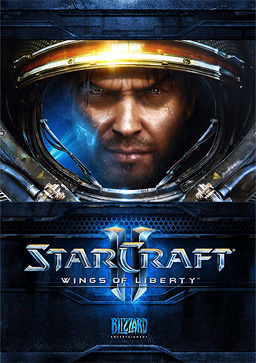
- Wings of Liberty (2010) — the Terran campaign. Jim Raynor, his rebels and the Hyperion.
- Heart of the Swarm (2013) — the Zerg campaign. Kerrigan rebuilds the Swarm.
- Whispers of Oblivion — a short Protoss prologue starring Zeratul that bridges into the final chapter.
- Legacy of the Void (2015) — the Protoss campaign, led by Artanis.
- Into the Void — the epilogue that closes the trilogy, unlocked after Legacy of the Void.
- Nova Covert Ops (2016) — optional mission packs starring Nova, set afterwards.
Wings of Liberty is free to play, so you can try the start of the story before committing to the rest.
Do I need to play the original StarCraft first?
Not strictly. Wings of Liberty gives enough context to follow the story. But the original StarCraft and Brood War — free since 2017 — set up the main characters and their relationships, especially Raynor and Kerrigan. If you have time, playing them first makes the trilogy hit harder. If not, a summary video or article will do.
How long does it take?
Expect each main campaign to take a substantial number of hours on Normal, depending on how thoroughly you complete optional objectives and how much time you spend between missions. The prologue, epilogue and Nova Covert Ops are much shorter. Altogether, it’s a big but very manageable undertaking.
Picking a difficulty
The campaigns offer Casual, Normal, Hard and Brutal:
- Casual: for players who just want the story. Enemies are weak and mistakes are forgiven.
- Normal: a good default for players with some RTS experience, or new players willing to learn.
- Hard: a real challenge, suited to players with multiplayer experience.
- Brutal: for experts and replays, requiring efficient play and knowledge of the missions.
If you’ve never played an RTS, Casual or Normal is perfectly fine: the story is the point. You can change difficulty between missions, so don’t be afraid to lower it on a stubborn level and raise it again later.
What each campaign asks of you
Wings of Liberty: build your army
Raynor leads a rebellion against the Terran Dominion and its emperor, Arcturus Mengsk, while taking contracts across the sector. Meanwhile, the Zerg return, and Raynor is drawn into a mission to save Kerrigan.
Between missions, you walk around the Hyperion, Raynor’s battlecruiser:
- Armory: spend credits on permanent upgrades for your units and buildings.
- Mercenaries: hire elite units you can call in during missions.
- Laboratory: collect research from protoss and zerg artifacts to unlock powerful upgrades, choosing between two options at each tier.
- Conversations: talk to the crew to learn more about the story and characters.
During missions, each one adds a twist: rising lava you must avoid, a train you must intercept, a day-and-night cycle with infected that attack in the dark, a planet about to be consumed by fire. Read the objectives before rushing — the twist is usually the key.
Mission choices also matter. At certain points, you can choose which missions to play and in what order, and a few branch the story.
Tips:
- Prioritise upgrades that help your favourite units.
- Don’t ignore bonus objectives: they often give research or credits.
- Experiment with units. Wings of Liberty has the largest unit roster of the trilogy, including classic units removed from multiplayer.
Heart of the Swarm: shape your units
Kerrigan seeks revenge and sets out to rebuild the Zerg Swarm. It’s the most personal campaign, centred on her journey.
Kerrigan is a hero unit you control in most missions. She levels up and unlocks abilities, which you choose from several options at each tier. She’s extremely powerful and the heart of your army.
Evolution missions let you reshape your Zerg units. In each one, you try two variants of a unit in a short scenario, then choose one permanently. For example, a unit might gain the ability to split into smaller units or to leap into battle. Choose what suits your style.
Mutations are smaller upgrades you can switch freely between missions.
Tips:
- Invest in Kerrigan’s abilities that match your playstyle; experiment between missions.
- Zerg are fast and numerous. Keep producing units constantly.
- Use Kerrigan aggressively, but watch her health.
It’s the most hero-focused and the fastest-paced of the three campaigns.
Legacy of the Void: command the fleet
After the prologue, Artanis leads the Protoss to reclaim their homeworld, Aiur, and then to unite the scattered Protoss factions against an ancient enemy.
From the Spear of Adun, the Protoss arkship, you:
- Unlock orbital abilities you can call down during missions, using solarite collected in missions.
- Choose unit variants from different Protoss factions, each with distinct abilities.
- Upgrade the ship with passive bonuses for your economy and army.
You can change these choices freely between missions, which makes it the most flexible campaign of the three. For many, it’s also the best-designed — we explain why in our review of Legacy of the Void.
Tips:
- Experiment with unit variants: there’s no wrong choice, and you can always switch.
- Orbital abilities can turn difficult moments around; use them often.
- Protoss units are expensive. Protect them, and use shields and repositioning to keep them alive.
Into the Void: the finale
The epilogue brings together characters from all three races for a final confrontation. Each mission is played as a different race, and the trilogy’s story comes to a close. Play it right after Legacy of the Void — it’s the payoff for everything that came before.
Nova Covert Ops: the coda
A set of mission packs starring Nova, a Terran ghost agent. Set after the trilogy, it offers a smaller-scale story with its own customisation systems. It’s optional, but well made, and a good way to keep playing after the finale.
Tips that apply to all three
- Bonus objectives give extra resources or research. Grab them when you can; they make later missions easier.
- Expand. New players often stay on one base. A second base early on is almost always the right call when the mission allows it.
- Keep producing workers early in each mission. A strong economy makes everything easier.
- Use control groups to select units and buildings quickly.
- Read the mission briefing: it often hints at the twist.
- Replay missions from the archive if you want to try a different choice or chase achievements.
- Don’t fear lowering difficulty: the campaign is meant to be enjoyed.
Achievements and replay value
Each mission has achievements, often tied to optional challenges: completing it quickly, without losing certain units, or on Hard difficulty. They’re a great reason to replay missions once you know them.
The mission archive lets you replay any completed mission with your current upgrades, making it easy to go back for achievements or to try different strategies.
After the story
When you’re done, there’s plenty more:
- Co-op Missions: two players, each with a commander from the campaigns, face the AI on special maps. It’s the most relaxed way to keep playing StarCraft II without the pressure of the ladder.
- Multiplayer: if the campaigns have given you a taste for strategy, try games against the AI, then ranked play. Our guide StarCraft for people who have never played an RTS covers the basics.
- Watch the pros: professional StarCraft II is still played and broadcast — including some of the world’s best players from the Nordic countries, as we explain in StarCraft in the north.
- Custom games: the Arcade offers community-made maps and modes.
Final thoughts
The StarCraft II trilogy is one of the great achievements of the RTS genre: three campaigns with distinct identities, strong mission design and a story that ties together nearly two decades of lore. Whether you play on Casual for the story or on Brutal for the challenge, it’s well worth your time.
Start with Wings of Liberty — it’s free — and see where Raynor’s story takes you.