Legacy of the Void: the best StarCraft campaign ever made?
Artanis, the Spear of Adun and the end of a trilogy. Ten years on, the Protoss chapter still sets the bar for RTS campaigns.
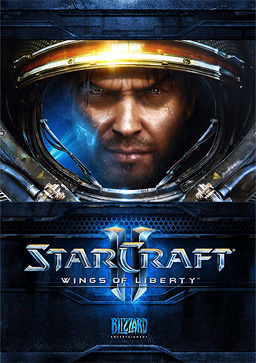
Legacy of the Void arrived in November 2015 with a difficult task. It had to close a story that had begun five years earlier with Wings of Liberty, continued in Heart of the Swarm and, before that, unfolded across the original StarCraft and Brood War. It had to give the Protoss — a race many players found distant and hard to relate to — a campaign of their own. And it had to deliver a satisfying ending to one of the longest-running stories in strategy gaming.
Revisited today, a decade later, it handles that weight remarkably well. It’s not perfect, but it’s arguably the best-designed campaign Blizzard ever made, and one of the high points of the RTS genre.
The setup
The Protoss have spent years in exile since their homeworld, Aiur, was overrun by the Zerg. Now, under the leadership of Artanis, Hierarch of the Daelaam, they’ve gathered a great armada to reclaim it.
Things go wrong almost immediately. An ancient enemy, Amon, a fallen Xel’Naga who has been manipulating events across the entire trilogy, reveals his hand. The Protoss are betrayed from within, and Artanis is forced to flee aboard an ancient arkship.
The campaign becomes a quest to unite the scattered Protoss factions — the Daelaam, the Nerazim, the Purifiers and the Tal’darim — against a threat that endangers every living thing in the sector. It gives the Protoss a depth they never had before, exploring their culture, their history and their divisions.
Whispers of Oblivion
Before the main campaign, a short prologue, Whispers of Oblivion, follows the Dark Templar Zeratul as he investigates a prophecy. It’s only a few missions long, but it sets up the story and introduces Amon’s threat. It’s well worth playing first.
The Spear of Adun
Between missions you command the Spear of Adun, an ancient Protoss arkship. It replaces the hubs of the previous campaigns — the Hyperion in Wings of Liberty, the Leviathan in Heart of the Swarm — and it’s the most elegant of the three.
Orbital abilities
By collecting solarite in missions, you unlock abilities you can call down from orbit during battles. Some examples of what they allow:
- Deploying pylons anywhere on the map.
- Calling down powerful beams that sweep across enemy forces.
- Temporarily boosting your units or your economy.
- Launching devastating strikes on enemy positions.
These abilities let you shape your playstyle. Want a stronger economy? A defensive army? Massive orbital firepower? You choose.
Unit variants
What makes the system special is the choice between unit variants. Each Protoss unit can be taken from different factions:
- Aiur (Khalai) variants, often focused on raw power.
- Nerazim (Dark Templar) variants, often emphasising stealth and tricks.
- Purifier variants, robotic versions of fallen Protoss heroes.
- Tal’darim variants, added later, with aggressive abilities.
Each variant changes how the unit works. A Zealot might charge, whirl or gain a different special ability depending on its faction. You can change these choices freely between missions, so every mission becomes a little experiment.
This flexibility is the campaign’s greatest strength. It encourages you to try new strategies and rewards creativity.
Mission design at its best
Missions keep introducing new ideas. Some highlights (without spoilers):
- Escort missions where you must protect a moving objective.
- Defensive missions against waves of increasingly powerful enemies.
- Timed objectives that force you to balance speed and safety.
- Shifting objectives that change during the mission, forcing you to adapt.
- Hero missions where you control a small group of powerful units.
Few missions feel like a standard “build a base and destroy the enemy”. Each has a twist, and the pacing is excellent. The difficulty climbs steadily toward a finale that brings every thread of the trilogy together.
Into the Void
After the main campaign, the Into the Void epilogue brings together characters from all three races for a final confrontation. It’s a short, intense trilogy of missions, each playing as a different race, that closes the story.
It’s satisfying, spectacular and occasionally a little too neat — but after so many years, seeing the characters united is genuinely moving.
Changes to multiplayer
Legacy of the Void also changed the competitive game significantly:
- Twelve starting workers instead of six, so matches get going faster and the slow early phase is shortened.
- Smaller resource patches, so bases deplete sooner and players must expand more often, making the game more dynamic.
- New units for each race, adding strategic options.
It also introduced new modes:
- Archon mode, where two players control a single base together. It’s a great way to learn from a more experienced friend.
- Co-op Missions, where two players, each with a commander from the campaigns, face the AI. Co-op has kept many players around ever since, with new commanders added for years after launch.
The story
The writing occasionally leans on lofty speeches, and some characters speak almost exclusively in grand declarations. Players who preferred the intimate, character-driven tone of Wings of Liberty may find it grandiose.
But the story succeeds in giving the Protoss emotional depth. Artanis is a sympathetic leader, the conflicts between factions feel meaningful, and the theme of unity — of overcoming ancient divisions — resonates.
Where it falls short
- The villain: Amon’s motivations remain simple, and the epilogue wraps him up a little too neatly.
- Tone: the constant grandeur can be tiring.
- Some missions: a few late missions feel more like spectacle than strategy.
These are minor complaints in a campaign of this quality.
How it compares
| Wings of Liberty | Heart of the Swarm | Legacy of the Void | |
|---|---|---|---|
| Race | Terran | Zerg | Protoss |
| Hub | Hyperion | Leviathan | Spear of Adun |
| Customisation | Upgrades, mercenaries | Evolutions, Kerrigan | Unit variants, orbital abilities |
| Tone | Intimate, western | Personal, revenge | Epic, unity |
| Flexibility | High | Medium | Very high |
Verdict
If you’ve played the first two chapters, this is a must. And even on its own — it’s a standalone game — it’s arguably the best introduction to what a modern RTS campaign can be.
Legacy of the Void combines strong mission design, flexible customisation and a grand finale for a story that spanned nearly two decades. It’s not flawless, but it’s the high point of StarCraft II’s campaigns and one of the best RTS campaigns ever made.
For the full picture, see our StarCraft II campaign guide.