From Kaer Morhen to Toussaint: the complete trilogy
We replayed The Witcher, The Witcher 2 and The Witcher 3 to understand how CD Projekt went from cult RPG to genre benchmark.
Few series have grown so much from one instalment to the next. In 2007, CD Projekt RED was a Polish studio with no development track record that had convinced BioWare to license it the Aurora engine. Eight years later it released one of the most influential role-playing games of its generation. Replaying the trilogy back to back — something we did over the course of a long, cold autumn — is the best way to see that leap, and to notice how much of the later games’ DNA was there from the very beginning.
Before the games: a distributor with a dream
CD Projekt began in the 1990s not as a developer but as a distributor and localiser, bringing Western PC games to Poland with high-quality translations. Its Polish version of Baldur’s Gate became something of a legend, and it gave the company a deep understanding of what made Western RPGs work.
Andrzej Sapkowski’s Witcher stories, meanwhile, were already hugely popular in Poland. An earlier attempt to adapt them to video games by another Polish studio had been cancelled, so when CD Projekt set up its own development team, the Witcher was the obvious choice. The studio was young, inexperienced and ambitious to the point of recklessness. That combination defines the first game.
The Witcher (2007): the apprentice
The first game opens at Kaer Morhen, the witchers’ fortress, with an amnesiac Geralt and an assault by a criminal organisation called Salamandra that turns everything upside down. The theft of the witchers’ mutagenic secrets sets the plot in motion, and Geralt sets off across Temeria to recover them.
It’s a rough game. Awkward camera options, constant loading screens and a combat system built around timing clicks to the rhythm of the animation, switching between fast, strong and group styles. Many players bounced off it in the first few hours, and even today it demands patience.
And yet everything is already there:
- Choices with no good side. The conflict between the Scoia’tael elven guerrillas and the Order of the Flaming Rose is the backbone of the story, and the game refuses to tell you who is right.
- Consequences that arrive hours later. A decision in the early chapters can resurface much later, in a completely different context, without the game ever flagging it as important.
- A sense of place. The damp outskirts of Vizima, the slums of the Temple Quarter, the lakeside villages — Temeria feels grey, poor and lived-in.
- Alchemy as preparation. Potions are toxic, so you can’t drink them freely. You brew them while meditating and plan which ones to take before a fight — a system that would survive, in different forms, into the sequels.
The Enhanced Edition of 2008 polished the voice acting, translations and loading times, and it’s the version to play today. If you want practical advice, our guide on how to enjoy The Witcher 1 today covers the rough edges.
Choices with no good side were there from day one.
The Witcher 2 (2011): the politician
With its own engine, REDengine, the sequel changes scale and ambition. Geralt is accused of regicide after a king is murdered in front of him, and the story becomes a chessboard of kings, sorceresses, conspiracies and elven rebels. The real culprit, Letho of Gulet, is another witcher — and one of the most interesting antagonists in the series, precisely because his motives make sense.
It’s the most political chapter and the riskiest. At the end of the first act, in the river town of Flotsam, Geralt must side with Vernon Roche, commander of Temeria’s special forces, or with Iorveth, leader of a Scoia’tael band. The second act is then completely different depending on that choice: different locations, different quests, different revelations. It’s an enormous amount of content that half of all players never see — a decision almost no studio would make today.
The combat, more active and built around dodging, rolling and Signs, is punishing for the first few hours, especially in the prologue. The game later received an Enhanced Edition in 2012 that improved the tutorial and added content, and it was also released on Xbox 360.
What The Witcher 2 does better than the other two games is density. Its structure of three closed acts, each in a contained region, allows a narrative focus that the open world of the third game doesn’t always reach. Every side quest feels connected to the political tension around it. We dig into this in our review of The Witcher 2.
The Witcher 3 (2015): the master
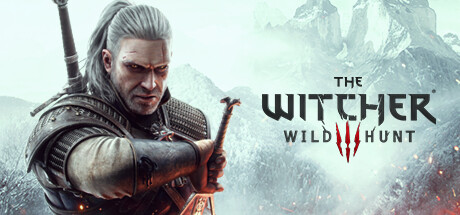
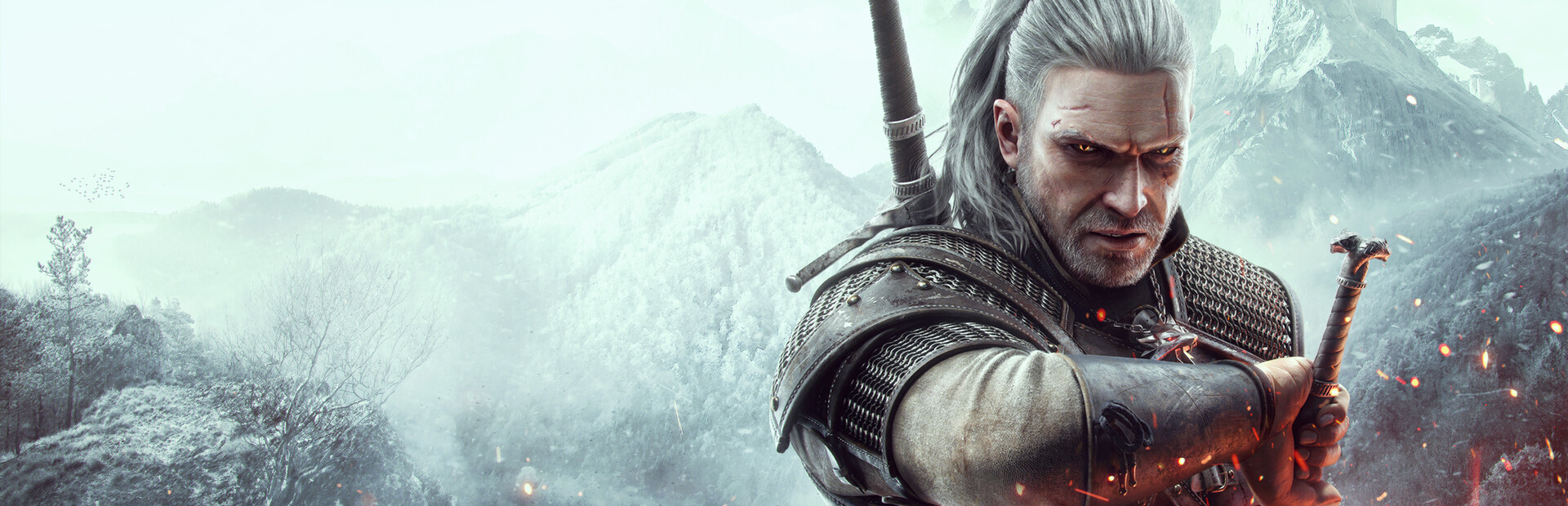
Wild Hunt opens up the map: Velen, Novigrad, Skellige. The search for Ciri, Geralt’s adopted daughter, gives him a personal motivation the earlier games lacked, and the return of Yennefer, absent from the first two games, completes the emotional picture.
Where Wild Hunt changed the industry was its side quests. They’re written with the same care as the main story, often with twists, moral dilemmas and endings that stay with you. The Bloody Baron’s storyline in Velen is still the example people cite when they talk about side quests done right: it begins as a simple search and becomes one of the most uncomfortable, human stories in the genre.
Other elements helped turn it into a phenomenon:
- Witcher contracts turned monster hunting into small detective stories, with investigation, preparation and a fight.
- Gwent, the in-world card game, became so popular that it later got its own standalone release.
- The world itself, with its war-torn villages, its huge city and its windswept islands, still holds up visually years later.
The two expansions round off the work. Hearts of Stone (2015) is a dark, contained fable about a cursed nobleman and a mysterious figure who grants wishes at a terrible price. Blood and Wine (2016) takes us to Toussaint, a duchy of saturated colours, vineyards and knights-errant that works as the perfect farewell for Geralt — he even gets a vineyard of his own to retire to.
In 2022, a next-gen update brought improved visuals, new options and some community-inspired content to the game, and in 2024 CD Projekt released REDkit, an official modding tool. If you’re planning a new playthrough, our essential mods guide and our beginner tips will help.
What ties the trilogy together
Played together, the three games reveal a remarkable consistency of tone, even as the technology and structure change completely:
- Geralt is never a chosen one. He’s a professional caught up in events bigger than him, trying to do the least-bad thing.
- Monsters are rarely the real monsters. In all three games, the most disturbing acts are committed by people.
- Politics is personal. Wars between kingdoms are shown through what they do to villages, families and individuals.
- Choices aren’t moral scores. There’s no good or evil meter. The games trust you to live with what you decided.
Recurring characters reinforce this continuity. Dandelion, Zoltan, Triss, Roche and others appear across multiple games, and seeing them grow (or not) over three adventures adds a layer that’s lost if you only play the last one.
What order should you play them in?
- If you have time: in order. Watching Geralt — and the studio — grow is part of the charm, and the payoffs in The Witcher 3 hit harder.
- If you’re short on time: start with The Witcher 3. It will bring you up to speed well enough, though you’ll miss nuances of characters like Roche, Triss or Letho.
- The middle ground: The Witcher 2, then The Witcher 3. It’s the best compromise between context and accessibility. On PC, the third game doesn’t import save files, but it lets you set some key choices from the previous one during a conversation.
Whatever you choose, don’t rush. These are games that reward patience: reading the books in the menus, listening to conversations, taking contracts you don’t strictly need.
The road ahead
CD Projekt has already shown the next step, with a new game starring Ciri as the protagonist. Whatever it turns out to be, it will be built on the foundations laid by these three games.
Nineteen years after that first step into Kaer Morhen, the trilogy holds up as a whole. Rough edges and all, but with a coherence of voice and theme that very few series ever manage. It’s the story of a witcher who wanted to be left alone, told by a studio that refused to play it safe.