From map editor to the birth of a genre
Tower defence, heroes in three lanes and a community that turned a modding tool into the origin of the MOBA.
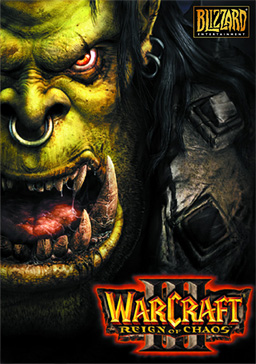
When Blizzard released Warcraft III in 2002, it included the World Editor, a map-making tool that let players do far more than place trees and gold mines. With its trigger system and, for more advanced creators, its own scripting language, players could change the rules of the game entirely: new units, new abilities, new win conditions, even new genres.
Blizzard had already shipped editors with its earlier games, and StarCraft’s had produced some inventive custom maps. But Warcraft III’s editor was far more powerful, and its timing was perfect: broadband was spreading, Battle.net made it easy to find players, and a generation of teenagers had time, curiosity and a copy of the game.
What followed was one of the most creative periods in gaming history.
How the World Editor worked
At its simplest, the World Editor let you design terrain, place units and set up starting conditions. But its real power lay in:
- Triggers: an event-condition-action system. “When a unit enters this region, if it belongs to player 1, spawn five enemies.” Without writing code, creators could build complex logic.
- The object editor: every unit, ability, item and upgrade could be modified or duplicated. Want a footman with 1,000 health and a fireball? Two minutes.
- Scripting: for advanced creators, a scripting language allowed even more control.
- Custom assets: maps could include custom models, textures and sounds.
The result was that a map could be almost anything: a role-playing adventure, a puzzle, a racing game, a survival challenge.
The golden age of custom maps
For years, Battle.net’s custom games list was a laboratory. You’d join a lobby, wait for it to fill, download the map and discover something new. Some of the most popular kinds of maps included:
- Tower defence: build towers along a path to stop waves of enemies. The genre existed in simpler forms before, but Warcraft III maps popularised it massively, and it later spawned countless standalone games.
- Hero defence and survival: a group of players controls heroes, defending against escalating waves.
- Role-playing maps: open worlds with quests, items and characters, often played over long sessions.
- Footman wars: each player controls a stream of units that spawn automatically, competing for map control.
- Mini-games and parties: collections of quick, chaotic challenges.
Many genres that now have games of their own were tried out there first. The custom games list was a free, constantly changing showcase of game design ideas.
Defense of the Ancients
The most important of these maps had roots in an earlier one. Aeon of Strife, a StarCraft custom map, pitted players controlling single powerful units against each other across lanes filled with computer-controlled waves.
In Warcraft III, with its hero units, items and abilities, that idea found its ideal home. A map called Defense of the Ancients — DotA — appeared, created by a modder known as Eul. Many variants followed, each adding heroes and items.
DotA Allstars brought together the best heroes from different variants into a single map. It was developed and maintained by several people over time, including Steve “Guinsoo” Feak, and later ended up in the hands of the developer known as IceFrog, who refined and balanced it for years.
DotA had everything we now associate with the genre:
- Two bases, each protected by towers and a main structure.
- Three lanes connecting them, filled with waves of computer-controlled units.
- Heroes with unique abilities, levelling up during the match.
- Items bought with gold earned by killing units and enemy heroes.
- Matches of around forty minutes, decided by teamwork, timing and strategy.
It became enormously popular, with its own tournaments, communities and culture — all inside a custom map for a game it was never designed for.
From map to industry
What happened next is gaming history:
- League of Legends (2009), developed by Riot Games, took the DotA formula into a free-to-play standalone game. Steve “Guinsoo” Feak was among those who worked on it.
- Dota 2 (2013) came from Valve, with IceFrog leading the design, continuing DotA’s legacy directly.
- Heroes of the Storm (2015) was Blizzard’s own entry, with characters from across its games.
The term MOBA — multiplayer online battle arena — eventually stuck for the whole genre, which today is played by millions and has some of the largest esports competitions in the world.
Other descendants
DotA was the most famous, but not the only influential map:
- Tower defence became a genre of its own, with many standalone games in the following years.
- Auto battlers grew out of the custom game tradition years later in Dota 2, showing that the lineage continued beyond Warcraft III.
- Hero survival and arena maps influenced many cooperative and competitive games.
In each case, ideas tested by amateurs in a free editor went on to shape commercial games.
Why it happened in Warcraft III
Several factors came together:
- A powerful, accessible editor, usable without programming knowledge but deep enough for experts.
- Hero units, which made role-playing and MOBA-style maps possible.
- Battle.net, which made finding players easy.
- Downloadable maps, so anyone joining a lobby could play without installing anything manually.
- A huge player base, providing an audience for every creator.
And today?
Warcraft III custom games still exist. The arrival of Reforged in 2020 updated the game, but its new terms of use for custom games caused controversy among creators, who worried about who owned their work. Some moved on; others kept making maps.
Even so, browsing the custom games list is still a great way to understand where many of the games we play today came from. Our guide on how to play Warcraft III today explains how to get started.
The lesson
The story of Warcraft III’s editor is a reminder that some of the most important ideas in games come from players. Give a community good tools and an audience, and it will invent things no studio would have dared to propose. A whole genre was born, not in a design meeting, but in a lobby full of strangers waiting for a map to download.