Torchlight III, revisited
What works, what doesn't, and whether it's worth it after the first two.
Torchlight III has a complicated history. It was born as Torchlight Frontiers, a free-to-play online game developed by Echtra Games, a new studio founded by Max Schaefer, one of the co-founders of the original Runic Games. During development, the project changed course: the free-to-play model was dropped and the game was rebranded as the third numbered entry in the series. It launched in 2020 on PC and consoles.
That change of direction is the key to understanding the game. Torchlight III is neither the MMO it was meant to be nor the classic action RPG sequel fans expected, but something in between. Years later, how has it aged? We went back to find out.
The setup
A century after the events of the previous games, the Netherim — ancient enemies — have returned, and the frontier of Novastraia is under threat. You arrive as a new hero, with a pet, ready to push back the darkness and build a fort on the edge of civilisation.
The story is functional at best. It provides a reason to move from zone to zone, but it rarely surprises or moves. If you’re looking for narrative, this isn’t the game.
What works
The classes have personality
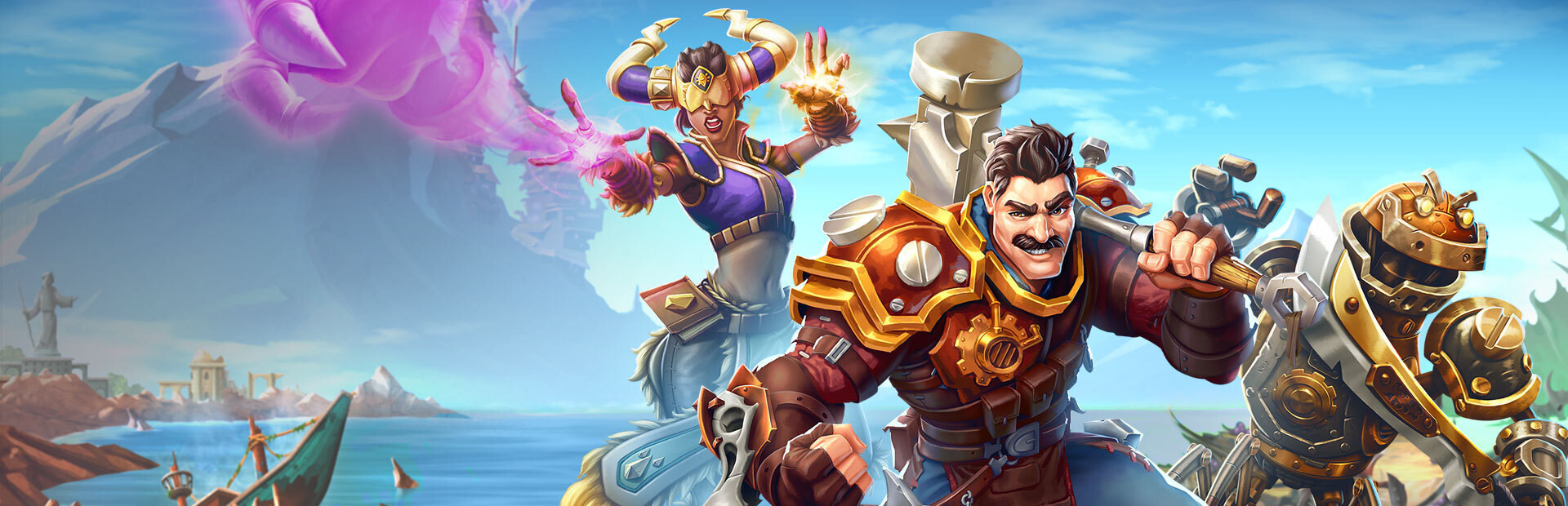
This is the game’s biggest strength. Each class has a strong identity and a distinctive mechanic:
- Railmaster: accompanied by a locomotive that follows you and fires as it moves. You can lay down tracks and summon train cars, turning the battlefield into a rail network. It’s one of the most fun ideas in the series.
- Forged: an automaton that manages heat. Using abilities builds it up, and venting it unleashes powerful attacks. It rewards rhythm and planning.
- Dusk Mage: balances light and shadow magic, building up energy in each to unlock stronger effects.
- Sharpshooter: a ranged class with bows and guns, built around precision and positioning.
- Cursed Captain: added later, a pirate captain with a cannon arm and an ever-growing arsenal.
Each feels distinct, and experimenting with them is the most rewarding part of the game.
Relics
In addition to your class, you choose a relic at the start: an artefact that grants a second skill tree. Relics offer elemental themes — fire, ice, poison and others — and can be combined with any class. This allows interesting builds and gives the system more depth than it first appears.
The fort
Your personal base, the fort, can be decorated and upgraded with buildings that provide bonuses and crafting options. It’s a nice place to come back to between quests and a clear nod to the game’s online origins. Visiting friends’ forts in co-op is a pleasant touch.
Pets
As always in Torchlight, your pet is an essential companion. It fights alongside you, carries items and can run to town to sell loot. There are more pet options than ever, and some can be obtained through play.
Co-op
Like Torchlight II, the third game supports cooperative multiplayer, and it’s significantly more fun with friends. Coordinating classes and relics adds strategy, and the game’s weaknesses are less noticeable when you’re chatting with others.
What doesn’t
The loot is flat
In a game of this genre, finding a special item should be exciting. Here it rarely is. Items often feel like small numerical improvements rather than game-changing finds, and legendary items lack the impact they have in the best action RPGs.
The pacing and structure
Zones are often similar in layout and objectives. Many quests involve collecting items or killing a number of enemies. The structure recalls online games, where content is designed to be repeated, rather than a carefully paced single-player campaign. This is the clearest sign of the game’s origins.
The visual personality
The series has always had a colourful, handcrafted look. Torchlight III keeps the colour but loses some of the charm. Environments feel less distinctive, and the art direction, while competent, lacks the warmth of its predecessors.
Endgame
Once you finish the campaign, the endgame offers harder difficulties, special maps and more loot. It’s serviceable, but it doesn’t match the depth of the genre’s leaders.
Technical state
At launch, Torchlight III had some performance issues and bugs. Several have since been addressed, and the game runs reasonably well on modern hardware. On consoles, it plays well with a controller, which suits its relaxed style.
Who is it for?
- Fans of the series who have played the first two games and want more.
- Co-op groups looking for a relaxed action RPG to play together.
- Players who enjoy experimenting with builds, thanks to the class and relic combinations.
It’s harder to recommend to newcomers. The first two games — especially Torchlight II — offer a better introduction to the series. Our guide Torchlight 1, 2 and 3: which one should you start with today? explains why.
How it compares
| Torchlight II | Torchlight III | |
|---|---|---|
| Classes | Four, solid | Five, very distinctive |
| Loot | Exciting, generous | Flat |
| World | Varied open zones | Repetitive zones |
| Mods | Strong support | Limited |
| Co-op | Yes | Yes |
| Charm | High | Moderate |
Verdict
If you liked Torchlight II and want more, Torchlight III will give you a few pleasant evenings, especially in co-op. Its classes are inventive, its relic system is interesting and the fort is a nice addition. But its loot, structure and visual identity never reach the heights of its predecessor.
It isn’t a bad game; it’s a game caught between two identities. For newcomers, we recommend the second entry without hesitation. For fans, Torchlight III is a decent, if forgettable, epilogue.