Torchlight 1, 2 and 3: which one should you start with today?
Three games, three very different moods. We help you choose your way into Runic Games' series.
The Torchlight series was born in 2009 at Runic Games, a studio in Seattle founded by veterans of Blizzard North and of the team behind Fate. The pitch was clear: a colourful, accessible loot-driven action RPG, with a pet that follows you around and can run back to town to sell whatever you don’t want.
Since then there have been three numbered entries, made under very different circumstances and with very different results. If you’re curious about the series, the question is simple: which one first? Here’s everything you need to decide.
What all three have in common
Before the differences, the shared foundation:
- Action RPG combat: you click (or use a controller) to attack, use skills and drink potions, fighting hordes of monsters in real time.
- Loot: enemies drop weapons and armour of different rarities, with random properties. Finding better gear is the main loop.
- Pets: a companion fights alongside you, can carry items and can be sent back to town to sell your junk. It’s the series’ signature feature.
- A bright, stylised art style: Torchlight has always favoured colour and cartoonish proportions over grimdark realism, which has helped it age gracefully.
- Accessibility: none of the games are hard to get into. They’re designed for relaxed sessions as much as long nights.
Torchlight (2009): the bottomless mine
What it is
The first game is a linear descent into the depths beneath the mining town of Torchlight. A corrupting mineral called Ember has been unearthing horrors in the mines, and you go down, floor by floor, through mines, ruins, crypts and stranger places, returning to town between trips.
Classes
- Destroyer: melee warrior.
- Vanquisher: ranged fighter with bows and guns.
- Alchemist: spellcaster with magic and summons.
Why play it
It’s short, direct and free of distractions. There are no open zones, no map full of icons, no complicated systems. Just one more floor, one more piece of loot. It’s perfect for a few evenings, and it runs on practically any computer.
Downsides
- Single-player only. The lack of multiplayer was the most common complaint at launch.
- Simpler than its successors, with less build variety and a thinner story.
- Repetitive in long sessions, given the linear structure.
We review it in more detail in Torchlight (2009), revisited.
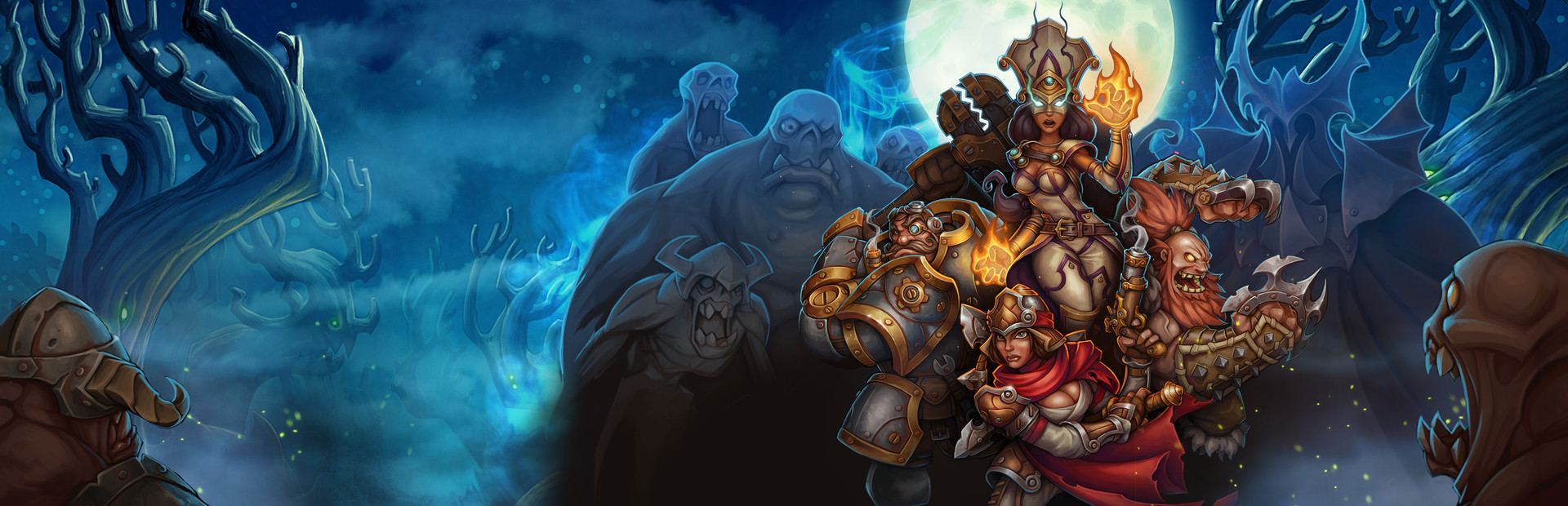
Torchlight II (2012): the peak
What it is
The sequel expands everything. Instead of a single mine, you travel across open zones — plains, deserts, forests — with towns, side quests and optional dungeons. The story follows the corruption of one of the heroes from the first game, and the pacing is excellent from start to finish.
Classes
- Engineer: heavy melee fighter using steam-powered gear and robots.
- Berserker: fast melee fighter channelling animal spirits.
- Embermage: elemental spellcaster.
- Outlander: ranged fighter mixing guns and glaives with dark magic.
Why play it
- Co-op, online and over LAN, which transforms the experience.
- Mod support, with a dedicated editor and a strong community that has produced new classes, content and overhauls.
- A very satisfying skill system, with clear trees and strong synergies.
- Pacing: zones never outstay their welcome, and loot flows generously.
- Replayability: New Game Plus, harder difficulties and Hardcore mode for permadeath.
Downsides
- The endgame is a little thin without mods, though the “mapworks” offer extra dungeons.
- Balance is not always perfect, and some builds are clearly stronger than others.
It has since been released on consoles too, so you can play it on a TV with a controller.
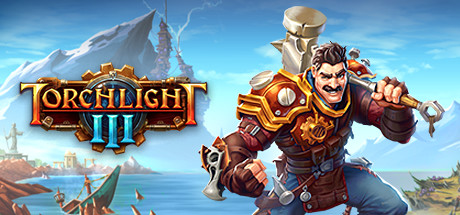
Torchlight III (2020): the experiment
What it is
The third game had a complicated birth. It began life as Torchlight Frontiers, a free-to-play online game, under a new studio, Echtra Games. During development it was reworked into a paid, numbered sequel. That history shows in its design.
Classes
- Dusk Mage: balances light and shadow magic.
- Forged: an automaton that manages heat.
- Railmaster: fights alongside his own train, laying tracks across the battlefield.
- Sharpshooter: a ranged class.
- Cursed Captain: added later, a pirate captain with a cannon arm.
Why play it
- Personality: classes like the Railmaster are genuinely fun ideas.
- Relics: each character picks a relic that adds a second skill tree, allowing interesting combinations.
- Your fort: a personal base you can decorate and upgrade.
- Co-op: like the second game, it’s more fun with friends.
Downsides
- Its origins show: zones that resemble each other, fetch quests and a structure that recalls online games.
- Flat loot: finding special items rarely excites.
- Less charm: the art is still colourful, but less distinctive than its predecessors.
We go into more depth in Torchlight III, revisited.
Comparison at a glance
| Torchlight | Torchlight II | Torchlight III | |
|---|---|---|---|
| Year | 2009 | 2012 | 2020 |
| Studio | Runic Games | Runic Games | Echtra Games |
| Structure | Linear dungeon | Open zones | Zones and hub |
| Multiplayer | No | Yes | Yes |
| Mods | Yes | Yes, strong scene | Limited |
| Best for | A short, focused run | Most players | Fans of the series |
Our recommendation
Start with Torchlight II. It’s the most complete, the one that has aged best and the one that will give you the most hours, solo or with friends. Its mix of open zones, strong classes, co-op and mod support make it one of the best action RPGs of its generation.
If it hooks you, the first game is a nice dessert for discovering the origins. It’s short, cheap and charming, and seeing where the series came from is part of the fun.
The third game, only if you’re already a fan of the series and want more. It has good ideas, and it’s fine in co-op, but it isn’t the evolution the series deserved.
Tips for your first run
- Pick a class that matches how you like to play: melee if you want to be in the thick of it, ranged or magic if you prefer to keep your distance.
- Use your pet constantly: send it to town whenever your bags fill up.
- Don’t hoard: sell or discard items you won’t use. Loot is generous.
- Try fishing: in the first two games, fish can temporarily transform your pet into other creatures.
- Play with a friend: in the second and third games, co-op makes everything better.
Whatever you choose, Torchlight is a series that respects your time. Pick one, grab your pet and head down.