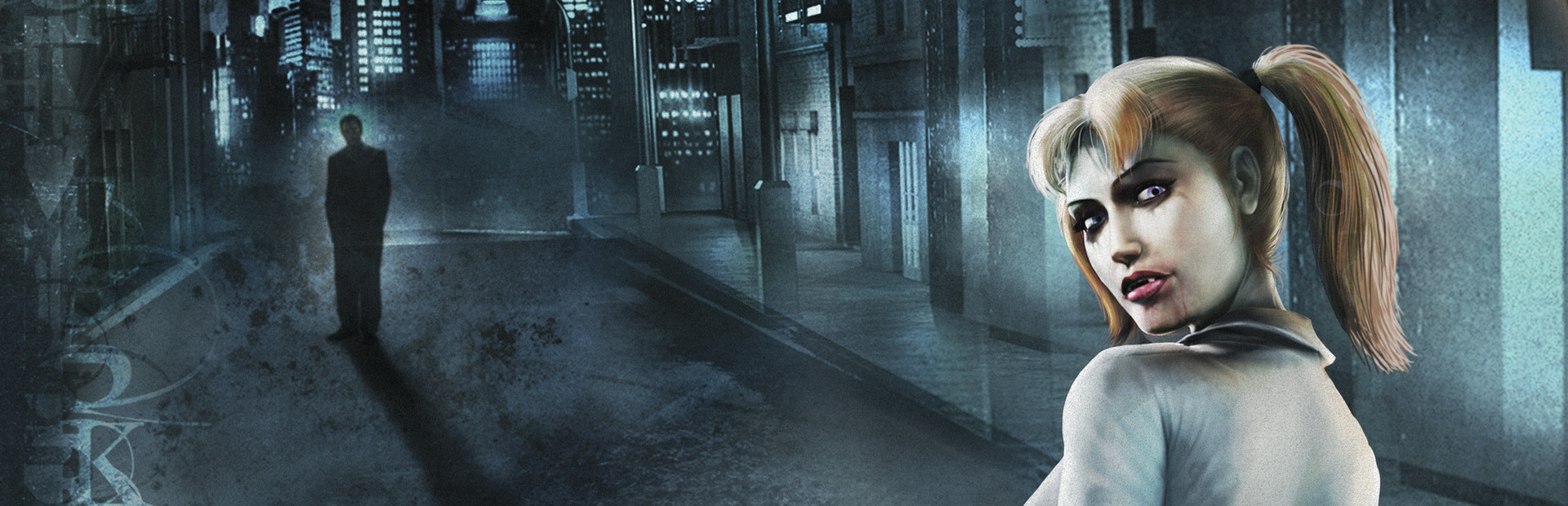
Vampire: The Masquerade – Bloodlines came out in November 2004, on the same day as Half-Life 2 — with which it also shared an engine: Troika Games had licensed Valve’s Source before anyone else could ship a game with it. It arrived riddled with bugs, with its final stretch visibly cut down and no time left to fix it. Sales were modest. Troika closed in early 2005.
That should have been the end. It wasn’t. Two decades later, Bloodlines is still played, patched, discussed and recommended, and it’s routinely cited as one of the best role-playing games ever made on PC. This is the story of how a commercial failure became a cult classic — and why its first neighbourhood, Santa Monica, is still the best part of it.
Troika: brilliant and doomed
Troika Games was founded by veterans of the original Fallout: Tim Cain, Leonard Boyarsky and Jason Anderson. Their games — Arcanum, The Temple of Elemental Evil and finally Bloodlines — all shared the same profile: enormous ambition, deep systems, sharp writing and technical problems that made reviewers despair.
Bloodlines was its most ambitious project. It took the World of Darkness, the gothic-punk tabletop universe of Vampire: The Masquerade, and turned it into a first- and third-person RPG set in modern Los Angeles. You’d talk, sneak, shoot, bite and scheme your way through vampire politics, with your choice of clan shaping how the world responded to you.
The team had only part of the time it needed. And launching against Half-Life 2 — the most anticipated shooter of its generation, running on the same engine — was the worst possible timing.
Santa Monica, the genre’s best first night
After a prologue in which you’re turned without permission and your sire is executed for the crime of creating you, the game drops you in Santa Monica. You’re a fledgling, tolerated only because the local prince sees you as useful. You have a dingy apartment, a few dollars and a phone number.
Santa Monica is small: a pier, a couple of streets, a beach house, a club, a run-down hostel, a clinic, a pawn shop. But every corner hides something:
- Smiling Jack, a grizzled anarch who teaches you the basics and becomes one of the most beloved characters in the game.
- The Voerman sisters at the Asylum club, a story of jealousy and identity that becomes one of the game’s most memorable quests.
- Mercurio, a ghoul in need of help, who introduces you to the vampire economy of favours.
- The Ocean House hotel, a haunted building you’re sent to clear. Doors slam, objects move, voices whisper. It’s one of the best-designed horror levels in any game — in a game that, in theory, isn’t a horror game.
Santa Monica works because it’s dense. There are few places, but they all have a story, and almost every job can be solved by talking, sneaking or biting. You get a sense of how the different factions — Camarilla, Anarchs, mortals, hunters — rub against each other, and you learn the rules of the Masquerade: don’t feed in public, don’t use powers in front of witnesses, don’t let humans know vampires exist.
Later hubs — Downtown, Hollywood, Chinatown — are bigger and more spectacular, but many players remember Santa Monica most fondly. It’s where Bloodlines shows exactly what it is.
Your clan changes everything
Choosing a clan isn’t cosmetic. A Nosferatu can’t be seen on the street without breaking the Masquerade and must travel through the sewers. A Ventrue is picky about whose blood they drink. A Toreador seduces where others threaten. A Tremere wields blood magic. And then there’s the Malkavian, whose dialogue is almost entirely rewritten — so much so that they get an article of their own.
Dialogue skills — Persuasion, Intimidation, Seduction — open alternative paths in many quests, and some characters react differently depending on your clan. It’s the closest a video game had come to the feeling of a good tabletop session, and few have matched it since. If you’re unsure where to start, our clan guide has recommendations.
The writing
What has kept Bloodlines alive is, above all, its writing. Characters are vivid, funny, tragic and often deeply strange. The dialogue is sharp and full of personality, and the game is willing to be dark, absurd and melancholy in the same scene.
It also captures something essential about the source material: being a vampire is a curse. You’re powerful, but every night is a negotiation between your hunger, your humanity and the political games of older, stronger creatures who see you as a pawn.
The problems
None of this means Bloodlines is flawless. Even patched, it has clear weaknesses:
- Combat is clumsy, especially gunplay. Builds focused on talking and stealth tend to have a better time.
- The last third is heavier on combat and lighter on choice, a clear sign of the time pressure the team faced.
- Some sections — particularly a few late-game dungeons — overstay their welcome.
But the first two thirds are so good that most players forgive the rest.
The community that wouldn’t let it die
The reason you can play it painlessly today has a name: the Unofficial Patch, maintained for years by the community with Werner Spahl (Wesp5) at the helm. It fixes thousands of bugs and offers a “basic” mode that only fixes things, and a “plus” mode that restores cut content and makes other changes.
Beyond the patch, a passionate community has produced mods, translations, analyses and endless discussion. Bloodlines became the kind of game that people keep recommending to each other, almost as a rite of passage for fans of the genre.
How to play it today
- Buy it from a digital store. The Steam version runs on modern systems.
- Install the unofficial patch. Choose the basic version if it’s your first playthrough, so you experience the game as intended, but stable.
- Set your resolution from the patch itself or the game settings.
- Pick a clan you can talk your way through with. A Toreador, Ventrue or Tremere will give you a more forgiving first run than a Nosferatu.
- Invest in dialogue skills. They’re more valuable than combat skills for most of the game.
- Explore Santa Monica fully before moving on. Talk to everyone; read the emails on computers; listen to the radio.
Why it never dies
Bloodlines is not a perfect game. It’s something rarer: a game with a voice so distinctive that, twenty years later, it still has no substitute. Many games have tried to capture its blend of freedom, atmosphere and character, but few have come close.
Every few years a new generation of players discovers it, installs the patch and walks out into the Santa Monica night for the first time. As long as that keeps happening, Bloodlines will keep its place among the immortals.